

News
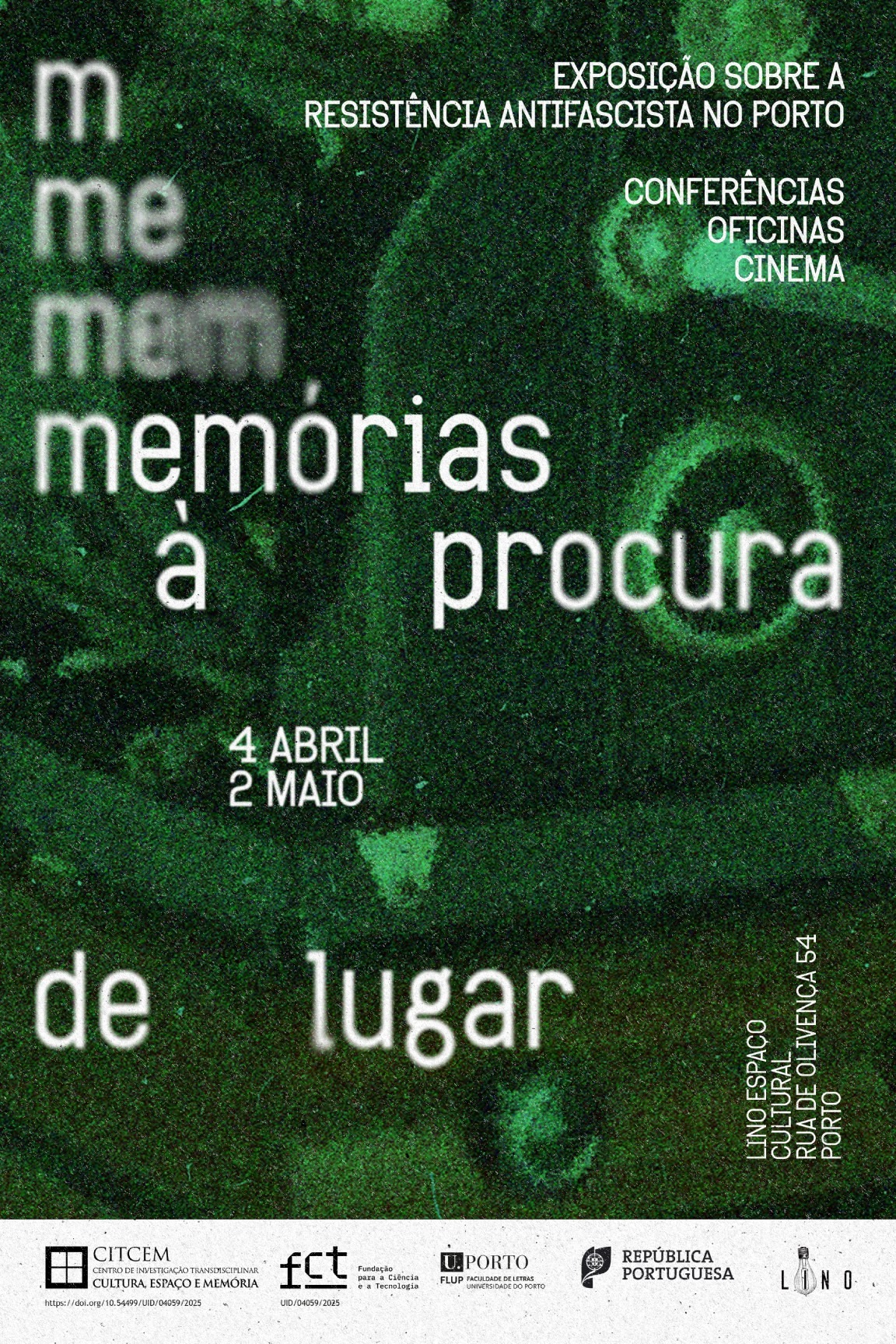
MEMORY(S) LOOKING FOR A PLACE
MEMORY(S)
LOOKING FOR A PLACE
Rua de Olivença 54, Porto | April 4 to May 2, 2026
Synopsis
Memória(s) à procura de lugar is an exhibition that portrays the Difficult Heritage (Macdonald, 2009) of Portugal’s fascist and colonialist past, based on work carried out with ten witnesses of the anti-fascist resistance in Porto. The project proposes a holistic vision between the role of oral testimony and the treatment of the material culture of this collective memory, in which each of the anti-fascist resistants recounts an episode of their struggle against the dictatorship using an object chosen by them. The presentation of this participatory collection acts as a mediator between their experiences and younger audiences. From the presentation of these objects-memory, the aim is to challenge new intergenerational dialogues that find in a space like the Museum a disobedient workshop of activism in defense of Freedom, Democracy and the rights won with the Revolution of April 25, 1974.
This exhibition is part of the doctoral work entitled “Memory and Project: subsidies for an activist museum of anti-fascism in Porto”, of the 3rd cycle in Heritage Studies, Museology, of the Faculty of Letters of the University of Porto, by Luís Monteiro.
Descriptive Memory
This research is based on the objective of drawing up a proposal for the patrimonialization of the collective memory of anti-fascism in Porto, taking as its object of study the difficult legacies of former political prisoners at the PIDE/DGS headquarters. The research is organized around these memories as a tool for defending democratic values and as testimonies that constitute a project for an idea of an activist museum. The methodological design is based on a transdisciplinary perspective that combines the areas of Museology, Historiography – particularly Oral History – and the most recent critical theory on Memory Policies. The objectives are: to collect testimonies from former political prisoners and work on them as oral history records; to build up a documentary and material collection for a possible Resistance Museum in the city, through a participatory process with former political prisoners and non-governmental organizations dedicated to the subject; to propose an exhibition that simultaneously explores the concepts of “difficult legacies” and “activist museum”.
In order to build up a material and documentary collection that constructs a discourse on the difficult legacies of the resistance to fascism in the city of Porto, a collaboration with the community is the motto for this project. For this operation, the Civic Movement “Don’t Erase the Memory” (NAM) and the Union of Portuguese Anti-Fascist Resistants (URAP) were chosen as associations representing former political prisoners. In this sense, this task will serve to build a possible collection for the museum, accessing “objects with memory” of former political prisoners, selecting archive documents that, as a whole, build a discourse that preserves the difficult legacies of the Estado Novo period.
Through the oral history testimonies gathered and the collection assembled, it becomes possible and desirable to organize a public event that materializes in the production of a temporary exhibition in the city of Porto. Its conception and implementation will be based on a community model that extends from the constitution of the collection to the assembly of the exhibition. The realization of this objective assumes a museological praxis that understands its craft not only “with”, but above all “for” the community, in this case, the community carrying the aforementioned difficult heritages, which also allows us to activate the notion of the museum as a contact zone (Clifford, 1997) and a workshop for activism.
Date and Place
April 4 to May 2, 2025 | Rua de Olivença, 54. 4000-369 Porto
Team
Curator: Luís Monteiro
Scientific Committee: Alice Duarte
Exhibition project: EASR students, Nuno Sanches and Tiago Ramos
Graphics: Rafael Medeiros
Video Catarina David
Sound Design and Multimedia: Gonçalo Ferreira and Hugo Guia
Participating with memory objects in this exhibition are: Alexandre Alves Costa; Cristina Cartaxo; Jorge Carvalho (Pisco); José Machado Castro; José Pacheco Pereira; Júlio Gago; Manuel Matos Fernandes; Manuela Juncal; Manuela Monteiro; Milice Ribeiro dos Santos; Sérgio Valente.
Acknowledgments: Alice Semedo; Ana Isabel Augusto; André Almeida; Carlos Maia; Frederico de Moura e Sá; Inês Homem de Melo; Inês Marinho; Luís Filipe Fernandes
Participated Collection: List of Memory Objects
Jorge Carvalho – prison matchbox (15x4x2 cm)
Manuela Juncal – Clandestine fake ID card (Size a6)
José Machado de Castro – PIDE file (Size a4)
Sérgio Valente – May 1st photo (Size a2)
Milice Ribeiro Santos – May ’68 vinyl (Size of a 6″ postcard)
Manuela Monteiro – Gestetner 230 press release duplicator (machine 70 cm wide x 80 cm high x 65 cm long)
Alexandre Alves Costa – Photography of the Alentejo peasantry in the 1960s (Size a4)
Júlio Gago – Documents from Teatro Experimental do Porto in the late 1960s (size a3 poster)
Manuel Matos Fernandes – Pamphlet from the 1973 student protests in Porto (Size a5 and a4)
José Pacheco Pereira – Hand-drawn map for a clandestine meeting (size a3)
Partners
Foundation for Science and Technology, IP
Center for Transdisciplinary Research on Culture, Space and Memory
Commemorative Committee for the 50th Anniversary of April 25
Lino Cultural Space
Facebook
Twitter
LinkedIn