

News
The Procession of the Paper Costumes of São Bartolomeu has been added to the National Inventory of Intangible Cultural Heritage (INPCI)
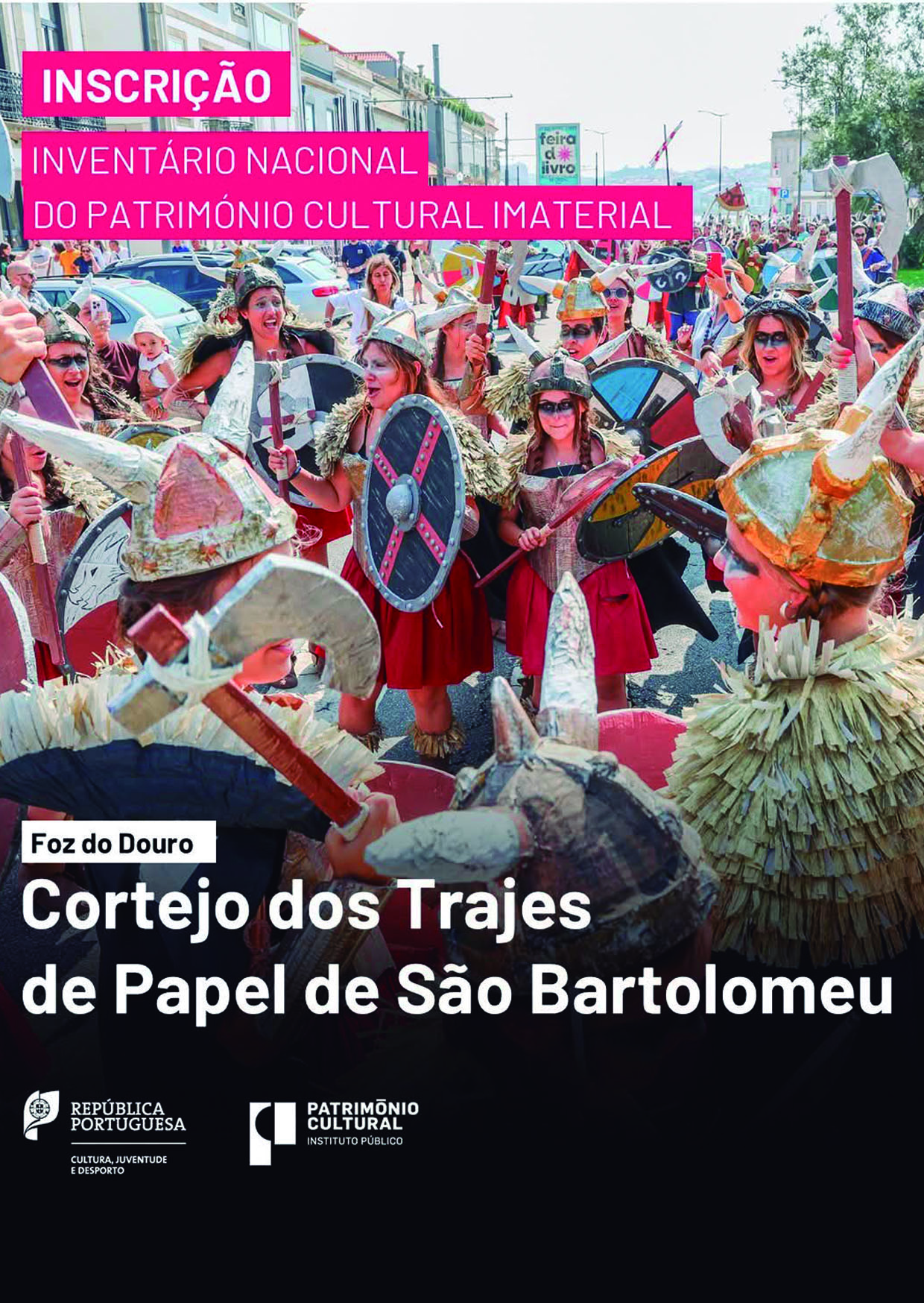
The Procession of the Paper Costumes of São Bartolomeu has been added to the National Inventory of Intangible Cultural Heritage (INPCI)
On June 11, Património Cultural, IP announced the registration of the “Cortejo dos Trajes de Papel de São Bartolomeu” event in Foz do Douro in the National Inventory of Intangible Cultural Heritage (INPCI), pursuant to the Order of June 2, 2026, signed by the Chairman of the Board of Directors, João Soalheiro, and published today in the Official Gazette (Announcement No. 138/2026). The nomination was submitted by the Union of Parishes of Aldoar, Foz do Douro, and Nevogilde (UFAFDN), and the application dossier was prepared by Professors Ana Cristina Sousa and Marisa Pereira Santos, faculty members of the Department of Heritage Sciences and Techniques (DCTP) at the Faculty of Arts of the University of Porto, and researchers affiliated with CITCEM.
As stated in the press release issued by this public entity, “through this process, Património Cultural, IP recognizes the significance of this cultural expression within the current identity framework of the community involved, its historical importance in the region where it is held, and its social, cultural, and artistic influence, as well as the dynamics of transmitting practices and knowledge developed over generations among the bearers of the associated knowledge.”
The Procession of the Paper Costumes of Saint Bartholomew takes place on August 24 (the liturgical feast of the Apostle), on the second-to-last Sunday in August, or on the Sunday closest to the saint’s feast day. Every year, the streets of Foz do Douro, which run parallel to the waterfront, are filled with crowds of people who either participate in or watch the parade. Movement, texture, color, and sound fill the air, leaving an indelible mark on the landscape and giving life to a unique cultural practice, carried out by the community and for the community. Active since the 1930s, this cultural tradition is currently carried out by various cultural, sports, and recreational groups within the territory of the Union of Parishes of Aldoar, Foz do Douro, and Nevogilde, including the parade organized by the Union of Parishes itself.
The preparation of the costumes is a long and complex process. The delicate nature of this material poses numerous challenges during production, which have been overcome through experience gained over the years. The craft of costume-making is taught through active, intergenerational participation, with the help of volunteers, in an informal setting and strictly through oral instruction. This work, which took several months to complete, is being washed away by the sea. Stripped of their skin and symbolically reborn through the purifying liquid, the participants wait calmly for the protective bath of the coming year.
See the news release from Património Cultural, IP here.
Poster credits: Património Cultural, IP. Available at: https://www.instagram.com/p/DZclaGEAJ7e/?igsh=MWJuZmRxMmVoN3FreA%3D%3D
Material and Intangible Heritage (CITCEM Research Group)
Facebook
Twitter
LinkedIn