

Publications
Collective works
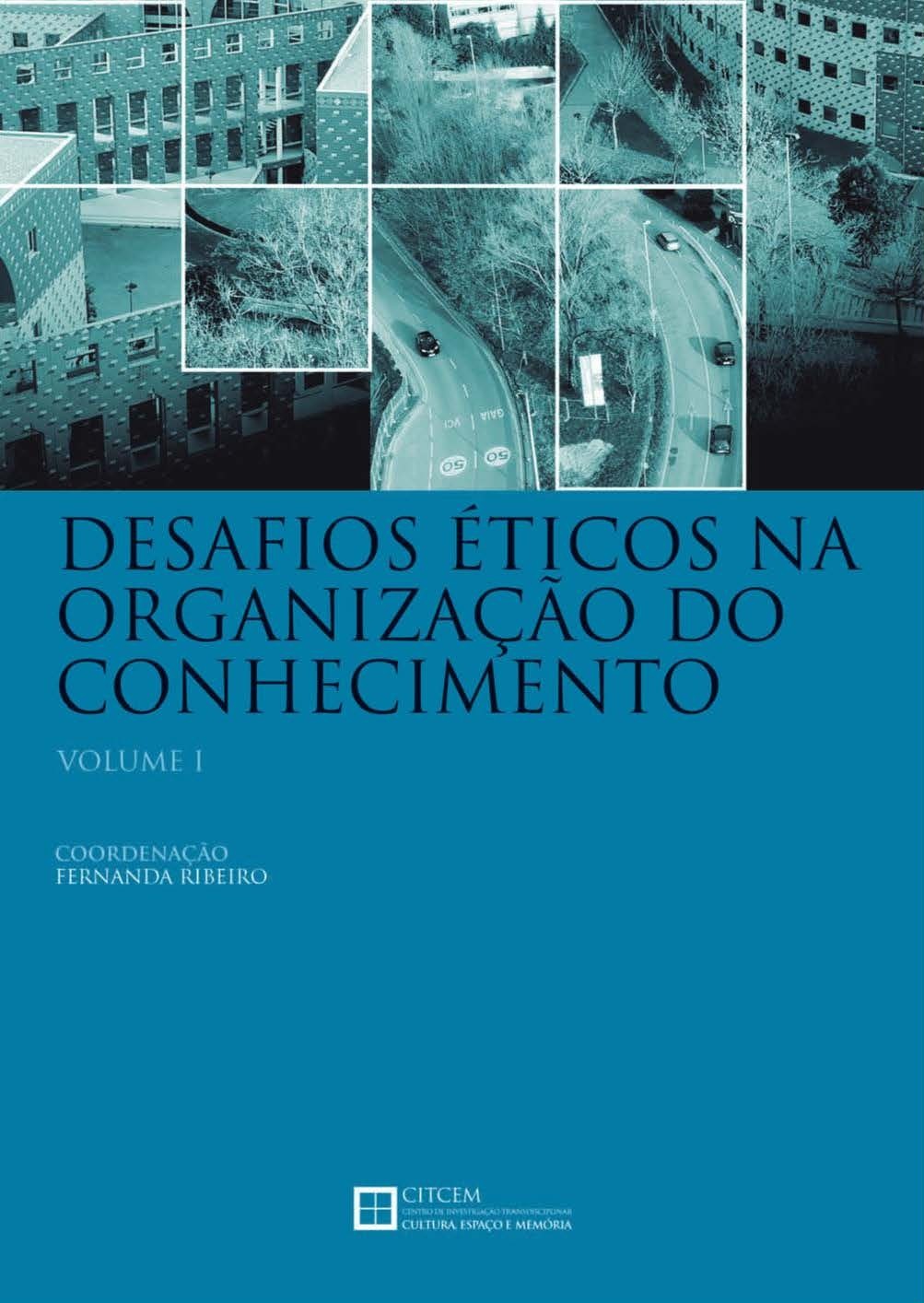
Ethical challenges in the organization of knowledge
ETHICAL CHALLENGES IN THE ORGANIZATION OF KNOWLEDGE
VOLUME I
PREFACE
INÊS AMORIM*
Ethical Challenges in the Organization of Knowledge is the thematic proposal of the VII ISKO Congress (International Society for Knowledge Organization) Spain and Portugal (November 13-14, 2025), organized by the Research Group “Information, Communication and Digital Culture” (ICCD), of the Transdisciplinary Research Centre Culture, Space and Memory (CITCEM), and promoted in partnership by the Faculty of Letters of the University of Porto and the University of Zaragoza.
Seventh meeting means sustainability, organizational capacity and opportunity. In fact, the topic is extremely demanding, because it responds to current challenges, which are briefly listed: how knowledge is produced, to what extent it is the result of a research process, to what extent artificial intelligence has entered this equation, how it reaches the public domain, and to what extent ethics permeates all these stages – from the production to the dissemination of knowledge.
The two volumes published show this path, because while the Organization of Knowledge is central, the four sections bring together reflections on Ethics in Theory and Practice, Generative Artificial Intelligence, Inclusion and Diversity and, finally, Users and Systems.
The relevance of the congress is unquestionable. It is part of the CITCEM Strategic Plan (2025-2029), approved by the Foundation for Science and Technology, which focuses on the concept of broadening dialogues within and outside scientific and academic communities, mobilizing the sciences and social awareness.
The breadth of the concept of community(ies) is in line with CITCEM’s work, based on transdisciplinarity, which is reflected in the program of activities of the ICCD Research Group, responsible for organizing this 7th ISKO Congress, because it is structured around three fundamental axes: Infocommunication in Context(s), Literacy(ies) and Places of Memory and Digital Convergence. They all converge in the sense of correctly interpreting and using information, evaluating its representation, management and production of knowledge.
Finally, it should be emphasized that this congress mobilizes researchers from different countries and backgrounds, as part of long-term scientific projects. I would like to acknowledge and thank this universe of consolidated networks in the form of Professor Fernanda Ribeiro, a professor at FLUP and a member of CITCEM, who took on the great task of bringing together national and international teams in its material form – by gathering and organizing the texts produced at this congress. When they are published in an open access system, they will penetrate the web space without borders, making a huge contribution to the democratization of information and digital culture.
Authors:
Fernanda Ribeiro (coord.)
Publisher:
CITCEM – Centro de Investigação Transdisciplinar Cultura, Espaço e Memória
ISSN:
ISBN:
978‑989‑8970‑99‑2
Year:
2025
Research Group:
Information, Communication and Digital Cultures